
You've launched your business into the world of email marketing, and your first few campaigns are out the door. But how can you tell if people are actually reading your messages? How do you know if a campaign is truly working?
The earliest, easiest place to look is your email platform's open rate. But that number takes some interpretation, and these days it tells you a lot less than it used to. Let's unpack what a "good" open rate really means now.
The Process Behind the Percentage
The open rate is the percentage of recipients who open your email out of the total delivered. It sounds straightforward, but it has never perfectly matched the number of people who actually read your message.
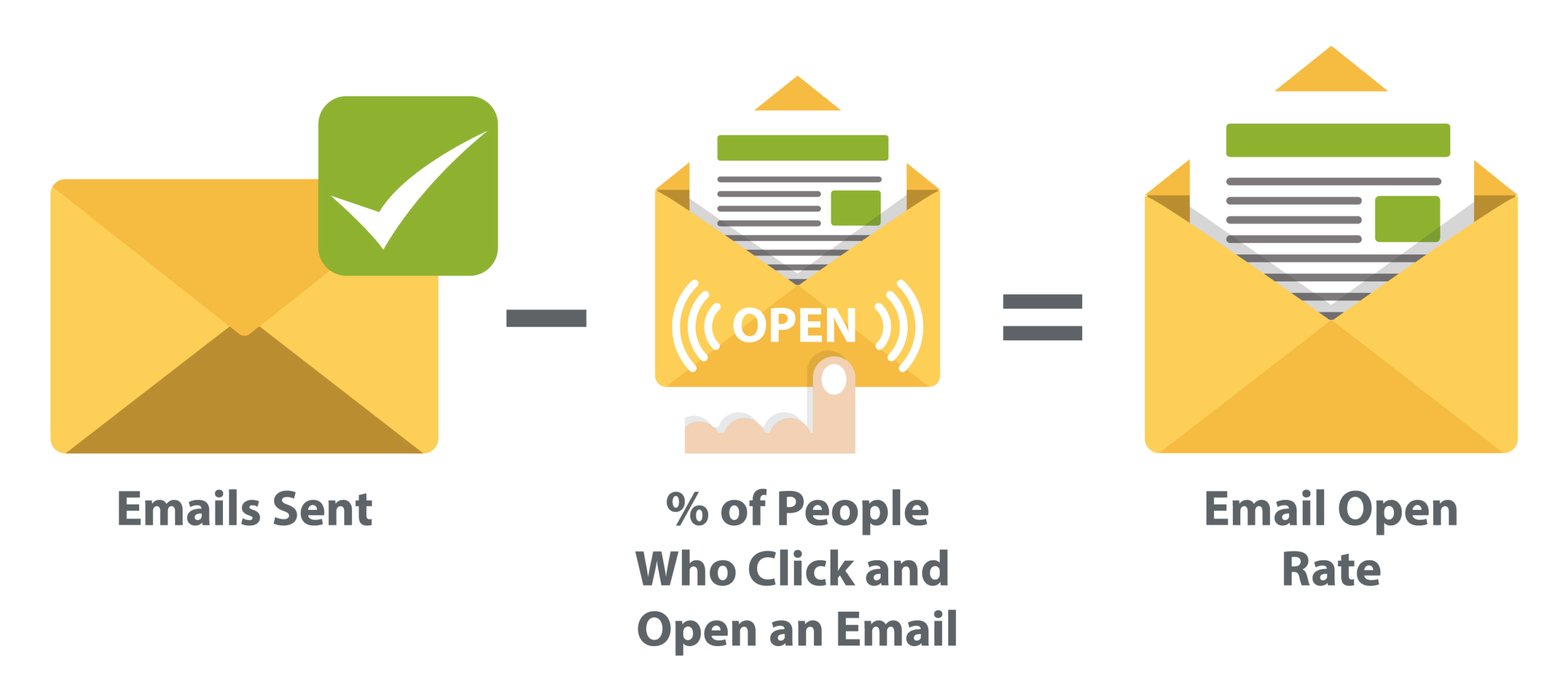
Open tracking works by loading a tiny invisible image when someone opens your email. That means a few situations have always thrown the number off:
- A preview pane lets someone start reading without the images (and the tracking pixel) loading.
- The reader has images or HTML disabled, so the open never registers, even if they read every word.
Those cases cause opens to be undercounted. But a much bigger change now pushes the number the other way.
Why Open Rates Aren't What They Used to Be
In 2021, Apple introduced Mail Privacy Protection (MPP). When someone using Apple Mail (on an iPhone, iPad, or Mac) receives your email, Apple quietly preloads the images through its own servers, whether or not the person ever opens the message. Since loading that image is exactly how email tools count an "open," MPP registers opens that may never have actually happened.
Apple Mail accounts for a large share of email opens, so the result is that reported open rates today are inflated and unreliable. Your platform might show a 45% open rate that doesn't reflect anywhere near 45% real human reads.
The takeaway: treat your open rate as a rough, directional signal, not a precise measurement. The metrics that actually tell you whether an email worked are further down the funnel: clicks, conversions, replies, and unsubscribes. Those reflect real human action that MPP doesn't fake.
So What's a Good Open Rate?
You'll still see benchmarks thrown around (20% was long the rule-of-thumb "good" open rate). But because MPP and similar tools inflate the numbers, today's reported open rates often look much higher, which makes comparing yourself to old benchmarks misleading.
More useful than chasing a specific percentage is watching your own trend over time and pairing it with real engagement. If your opens hold steady but your clicks are climbing, that's a win, regardless of the headline number. Treat everyone on your list as a quality lead (they opted in, after all) and focus on moving them to act.
First, Make Sure You Reach the Inbox
None of this matters if your email lands in spam. As of February 2024, Google and Yahoo tightened their requirements for senders, especially anyone sending in bulk (5,000+ messages a day to Gmail). To stay in the inbox, you need to:
- Authenticate your email. Set up SPF, DKIM, and DMARC for your sending domain so mailbox providers can verify your messages really come from you.
- Make unsubscribing easy. Include a one-click unsubscribe option and honor opt-outs promptly, within a couple of days.
- Keep complaints low. Stay under a 0.3% spam-complaint rate (ideally below 0.1%). The best way to do that is to email people who genuinely opted in and send them content they actually want.
Your email platform and your web team can help you set up authentication. Get this foundation right first, because the best subject line in the world can't save an email that never reaches the inbox.
Boost Engagement: Personalize Your Subject Lines
There's no single metric that fully captures a campaign's impact, but your subject lines are one of the biggest levers you can pull. Are they coaxing readers to find out how you'll solve their problems? Is there a personal, conversational tone? And just as important, does your content deliver on what the subject promised? It's all about personalization.
- Names. We're wired to notice our own names, even knowing software inserted them from a list. Personalized emails reliably outperform generic, one-size-fits-all blasts.
- Industry and context. Don't stop at "Hi, Jim." Think about Jim's industry and what he's likely working on. Try "Is your desk covered in paperwork, Jim?" or "Jim, when did you last test…"
- Readability. Watch your length. Consider the devices your readers use; if the end of a long subject line gets cut off, your carefully crafted wording never lands.
- Conversational, buzzword-free language. Spam filters are far smarter than simple trigger words now, but tone still matters. You wouldn't say "buy now," "easy money," or "complete cure" in a real conversation. Relate to the person first, and your call to action will mean more.
Personalize Your Delivery Timing
Many companies send overnight so emails are waiting when recipients first check their inbox. But think about how you feel arriving at work to a pile of promotional emails. You probably delete them or let them sit while the day's to-do list grabs your attention.
 Now consider how much more receptive you are to an email that arrives mid-morning or mid-afternoon. It can even be a welcome break, especially if the subject resonates with what you're working on at that moment. Test different send times and let your own data tell you when your audience is most engaged.
Personalize the Content to the Right Buyer Persona
Have you ever read an ad that seemed to know exactly what you were thinking and feeling? Did you end up buying, or at least checking it out?
Your email won't "stick" if it's too broad. But if you've built your list around a specific type of customer (your buyer persona), you can be remarkably specific in anticipating their needs, feelings, and frustrations.
 You know exactly what problems your product solves, so describe the relief your customers will feel. If it fits naturally, drop in a bit of industry language to show you speak their world. Just don't overdo it.
As you review your last campaign and plan your next, remember the open rate isn't the be-all-end-all, and these days it's one of the least reliable numbers you have. Look at the metrics that reflect real action: are people clicking your links? Sharing or forwarding your message? Replying?
Comparing those engagement metrics shows you which part of the relationship is strongest and which needs work. But if you take away one thing, let it be this: email marketing has to be personal. It has to feel like a conversation that genuinely cares about each Joe or Sally reading it. The moment people turn into list items, the personal touch is gone, and your results show it. Treat every send as part of a real relationship, and your engagement will follow.
If you'd like help building email campaigns that actually land and convert, get in touch with our team.
This is part of our guide to marketing your small business online.


0 Comments