
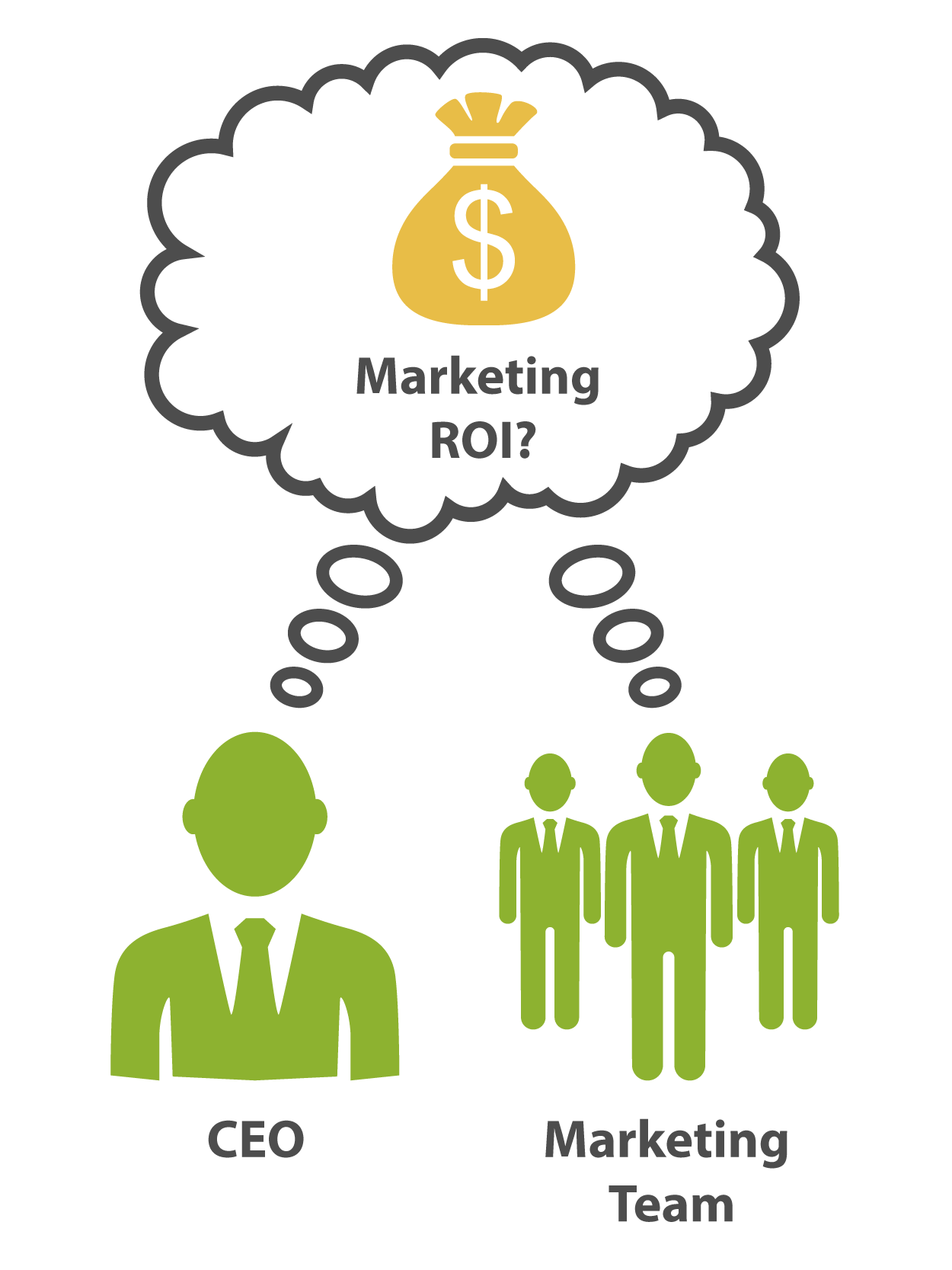
 On the next $1,000 you spend on marketing, do you (or your boss) know how much revenue you're going to get?
Even better, do you know how much profit you're going to make?
No?
At least you're in good company; it seems like most don't know, and I would argue that the lack of a solid number is the greatest self-imposed limit to your company's growth.
Here's my logic:
Q: If you knew you made a profit of more than $1,000 for every $1,000 you spent on marketing in the short term (not including the long-term results), how much would you want to spend on marketing?
A: An infinite amount. At least I'd hope so.
If there was a magic machine that you could put money into and get back significantly more money, you'd be ecstatic. But what if you don't know you have that machine?
To stretch the analogy a little further, what if you had a bunch of unlabeled machines, some of the profit-making variety we just discussed, while others simply ate your money? You'd be much less likely to use any of them. This is where most companies' marketing campaigns reside. Not tracking, or at least estimating, the results of individual marketing campaigns is a company-killer.
What Can Actually Be Tracked
You'd be surprised what kind of things can be accurately tracked and tied back to real dollars.
One example: we place printed magazine advertisements with dozens of magazines, and our clients can see how many calls each magazine ad generated. More than that, we can track which of those calls resulted in sales on the phone, even tallying how many times certain words or phrases were used within the call.
Another phone example: each visitor to our i7 Marketing website is shown a different phone number than every other visitor using the site at that moment. We can associate each call with prior and future interactions with our website (the pages you visited, and in many cases even the keyword you searched to find us). That lets us know how many leads every effort produces, create better content, and focus our strategies on the things that really matter.
Already convinced that this is valuable? Give us a call at 844-777-7794 to discuss how we can revolutionize your marketing campaigns.
Tracking Online
On the web side of things, we use specially generated tracking links on social media posts, in email campaigns, and more to see customer interaction far more granularly than would normally be possible. Not only can we tell which email in a series the customer clicked, but we know which resource within the email grabbed their interest. And if there are multiple links within the email to the same page, we can tell which one was used. More than just showing whether the campaign as a whole is succeeding, this lets us see which individual components worked best and what can be improved. Over time, our efforts get more and more targeted.
All of this ties back to a centralized analytics platform (we're partial to Google Analytics 4, or GA4), and we act on those insights regularly. GA4 is built around tracking events and conversions across devices and channels, which makes connecting your marketing activity to real outcomes more reliable than the old page-view-based approach.
I don't want to oversell this: data is never perfect, and some influence is always hard to capture. Someone might see a print ad, do nothing at the time, then a day later remember your product, search for you online, and buy. With simple last-click tracking, that sale gets credited entirely to search, and the print ad gets none of the credit it earned.
This is exactly where modern, multi-touch attribution helps. Instead of handing all the credit to the final click, multi-touch models spread it across the touchpoints that contributed along the way, and GA4's data-driven attribution uses your own data to estimate how much each step actually mattered. It isn't flawless, but it paints a far more honest picture of what's really driving sales than last-click ever did. Paired with expert judgment, polls, and industry data to fill the remaining gaps, this approach is an order of magnitude more useful than less sophisticated methods.
Once you've got comprehensive lead and purchase source tracking in place, paired with real numbers, you'll finally be able to look at your campaigns and see which "magic money-making machines" you have, then scale them up and profit. (For a simple way to frame that value, see how to think about your marketing in terms of CAC, LTV, and ROAS.) And we'd love to help with that, so get in touch and let's talk.


0 Comments