
You've just had a child, and you're in love. A brand-new brainchild.
You've outlined and executed your company's online marketing strategy. You step back and beam with pride, ready to watch it grow your business.
You couldn't wait for this moment. So why are you feeling underwhelmed?
Do the results have you wondering whether your customers are truly engaging with your brand? Are you worried about whether you'll see a good return on your investment?
You need to make sure your online strategy is working. You want to measure the effectiveness of your marketing, keep up with fast-changing search engine optimization (SEO) best practices, and, when you spot areas with little growth or activity, make the right adjustments.
These seven suggestions will help you refine your online strategy and set you on your way toward sustainable results.
1. Hone in on your audience
Who are you talking to? You won't know until you get to know your customers: past, present, and potential. It's crucial to understand where they're coming from and what they're searching for. What interests them? What makes them tick?
So how do you get to know them without ever meeting them? You build data-driven buyer personas.
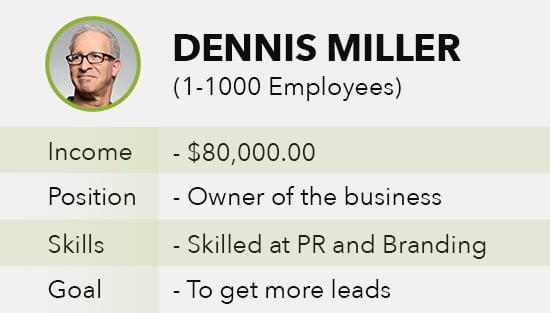
HubSpot offers a straightforward definition of buyer personas:
"A buyer persona is a semi-fictional representation of your ideal customer based on market research and real data about your existing customers."
Buyer personas give you a basis for relating to your potential customers. They help you understand patterns and behaviors so you can better guide people along the buyer's journey. Build these personas from data on prospects, customers, and loyal supporters. In a nutshell, you'll want to:
- Interview customers
- Identify trends
- Create tailored website forms
- Use the information and data to transform your strategy
If you'd like to go deeper and see an example persona, download our free guide, How to Create Buyer Personas for Your Business.
Creating a persona and putting your strategy into action won't happen overnight. But a clear, defined audience built on real research will propel your content marketing strategy.
2. Focus on user experience
In today's technology-driven world, it's all about the user experience (UX). Good UX puts users first, designing your online presence around them while still keeping your company's goals in mind. Your brand matters, but how customers relate to and interact with it matters more. Here are a few areas where your website should excel.

Quick load time
And we mean quick. The widely cited benchmark is to load in under three seconds. Google's own research found that:
"53% of mobile site visits leave a page that takes longer than three seconds to load."
Google now holds sites to an even sharper standard through Core Web Vitals, the set of speed and stability metrics it factors into rankings. The target for "good" loading speed (largest contentful paint) is under 2.5 seconds. Test your pages, and if they're slow, fixing that is one of the highest-impact improvements you can make.
Easy navigation
Think about how you want customers to move through your site. What page should they see first? Which links need to appear prominently no matter where someone lands? And, most importantly, where do you want them to end up?
The obvious place to start a navigation audit is your menu. Whether it's a top bar, a collapsible mega menu, or a footer menu, make sure users can easily turn to it for guidance. Be clear with your page titles: if "About" does the job, there's no need to stretch it to "Who We Are" or "Read About Our Story" unless the content calls for a more personal touch. In most cases, short and straightforward wins.
Declutter if necessary. Trim the menu to a few pertinent options and move the rest to the footer, or "the junk drawer," as StoryBrand's Donald Miller calls it:
"[The junk drawer] might include links to Contact, FAQ, About, Employment options, etc. Those areas are easy to find for those who are looking, but they don't clutter up the top section and confuse potential customers."
Ready-to-go, useful material
Give customers curated material, useful and thorough content they can put to work in their own efforts. With your audience in mind, provide the resources they need, other blog posts, statistics, or relevant research, even if that means linking to another page. (Just set those links to open in a new tab so you're not sending people away from your site entirely.) Whatever your page title promises, deliver it, and give people enough information to take action.
3. Be a generous brand
Provide value to your customers, not just a product. Be generous. Make your audience feel that you value them enough to give them something extra, to show or teach them something, even before they've spent a dime.
But what does being a generous brand mean? Do you give away products and services for free, or at a discount? Not exactly. We want your business to grow, after all. Being generous means offering value early in the buyer's journey, and that can take many forms. Three examples:
- Give away content that teaches, like PDFs, podcasts, and blog posts.
- Instead of marking prices down, add value with extras and bonuses.
- Keep your marketing clear and concise so you don't waste your customers' time.
The goal isn't to give away your products and services. It's to show potential customers how valuable those products and services are by being a valuable brand, one that puts customer needs first.
Say you sell bedazzled hair clips. Content to give away could be videos of fun hairstyles to do with hair clips (bedazzled ones, especially). An added value might be "Buy 4, get the 5th free" or "Buy a pack and get a hairstyle guidebook." Then, to save customers time, organize your content to match the buyer's journey: a description of the clips, photos, testimonials and reviews, a how-to guide, an instructional video, and so on. And next to it all, use call-to-action buttons that catch the eye.
4. Use clear CTAs
If people are coming to your site, they probably already need what you offer. Make sure to clearly show them exactly what to do to buy it, download it, or share it.
It sounds like a no-brainer, but it's easy to overlook. Even if a customer falls in love with your product, if they're confused about where to buy it or how to add it to the cart, chances are they'll give up. To prevent that, be generous with CTA placement: at the top of the page, after an explanatory paragraph, next to the testimonials, anywhere relevant.
And your CTAs don't always have to say "Buy Now." Other examples include:
- Download PDF
- Sign up for our newsletter
- Register for the next webinar
- Call now
- Watch this video
- Fill out this survey
- Start your free trial
Whatever your CTA is, use clear, actionable language. Choose verbs that tell people exactly what their next step is.
5. Showcase reviews and testimonials
This is a big one. Think about the last time you made an online purchase. Did you only look at the pictures? Did you only read the company-written description? Of course not. You read the reviews.
You wanted to know what real customers had to say about the product and the company. Is it quality? How was customer service? Did it perform as expected? Would they recommend it?
Online reviews and testimonials are the internet's version of word-of-mouth marketing. When someone likes your product or service, they tell others, which spreads brand awareness: they write a review, a prospect reads it, buys, and, if they're happy too, keeps the chain going. So showcase your reviews, whether through pull-quotes or a comment section. One note about a comment section: you must reply to every comment, good or bad. If someone asks a question, follow up. If they have a complaint, address it and apologize if appropriate. Above all, respond with kindness and empathy.
6. Be smart with social media

A website is foundational, but active social media accounts are a crucial next step for your whole marketing campaign. And like the rest of your campaign, your social strategy has to be well thought out.
Think back to the first tip about knowing your audience. Once you've defined your ideal customer, go meet them where they are.
- A busy parent might be sharing the kids' accomplishments on Facebook, pinning on Pinterest, or getting inspiration on Instagram.
- A younger creator might post on YouTube or TikTok to talk through a topic or share a lifehack they discovered.
- Public figures often take to X to share their opinions in real time.
Whichever platforms your audience uses most, you should have not just an account but an active one. Here's why.
First, for discoverability. Your own profiles often rank in search for your brand name, and an active presence helps people find and recognize you. To be clear, social activity isn't a direct Google ranking factor, despite a common myth, but it drives traffic, builds brand awareness, and gets your content discovered and shared, all of which support your broader visibility.
And for your people. If you're a clothing company, you'll want to keep reminding customers about sales and seasonal trends, and maybe share styling tips, posting once or twice a day without bugging anyone. If you're an accountant, tax season comes once a year for the average person, so monthly newsletters or how-to posts keep you top of mind for when it does. However often you post, the goal is for customers to think of you when they need a new pair of pants or help with their taxes. To get there, keep showing up in their feed.
You don't have to be on every platform, because your audience isn't. Research the platforms they use most and start there. What matters isn't how many accounts you have; it's how much engagement you earn. Here are popular platforms to consider:
The biggest tactic for building brand awareness is engagement. Remember, real people live on the other side of the screen. Talk with them like they're real, engage with them, and encourage them to share your content (with clear CTAs, you guessed it). The more you humanize your brand, the more they'll listen.
7. Create engaging, meaningful content

This final point should be the cornerstone of your content marketing strategy. You can do every other SEO practice just right, unique meta descriptions, well-formed headlines, strong keywords, but if the body of your content isn't relevant to your audience, none of it matters.
Your words should be well thought out and well researched. Your audience needs to know they can trust you. Pique their interest. Give them a reason to be curious. Show them your product or service offers far more value than a sneaky scammer would.
Your words should resonate with readers and entice them to act. After reading your piece, you want people not only to remember it but to share it with their friends. It needs to be better than good. It needs to be memorable.
Address their concerns and answer their questions. Listen to their pain points and help relieve them. If it's thrills they're after, thrill them. Bottom line: figure out what they want, and be the one to give it to them.
Envisioning your online strategy
Odds are you've envisioned your future: the color of the house you want, whether your next vehicle should be practical, the kind of grandparent you hope to be, all that jazz. But have you taken the time to envision your company's future the same way?
What impression do you want your website to leave? How do you want potential customers to regard your brand? Do you see your company as an informative Instagram presence or a witty voice on X?
This is the best place to start, whether you're building your online marketing strategy from scratch or deconstructing what you have to build something better. Brainstorm it, document it, and transform your content marketing strategy into something bold and effective. These seven tips will help you along the way.
Creating or modifying a content marketing strategy can be daunting, but the payoff is worth the effort. If you'd like help getting yours up and running, contact our team.
This is part of our guide to marketing your small business online.


0 Comments